Monday, March 31, 2014

Early morning sky

The sky changes so quickly in the morning.  That's especially true on these cool spring mornings when the mist is rising off the lake while the sun is inching its way above the trees across the lake.

Below are a series of three images, all captured within minutes of each other.  Note how different the landscape...lakescape...skyscape looks as the sun rises higher in each successive picture.  A welcome a rush of daylight.


8:25 a.m. - The sun begins its climb...


8:31 a.m. - Orange hues fill the sky, reflecting on the still water


9:12 a.m. - The orange sky is replaced by a hint of blue while the mist still rises and the sun begins to shine on the green trees and bamboos in the distance


Bath time for eagles

Since the beginning of the year, I've watched a bald eagle take a bath in our lake on two separate occasions.

The first time happened in January. I was upstairs, readying the guest rooms for a visit from my daughter Jenny, son-in-law Brett and our twin grandchildren when I just happened to glance out the window. As soon as I saw the large, dark, white-topped shape in the shallow water on the far side of the lake, I knew it was an eagle. I ran downstairs, grabbed my camera and dashed outside.


An eagle is easy to spot, even from afar


The pictures I took that day came out surprisingly well despite the distance and my shaky-handed excitement. I clicked off numerous shots from my side of the lake while across from me, the eagle splashed water on its feathers, fluffed out its wings and eventually flew to a nearby pine to preen and dry. 


After-bath perch and preening


Living next to a lake, I’ve had the opportunity to see a wide range of animals splash around in the water, but this was the first time I’d seen an eagle take a bath. I found the experience riveting.

With a population of approximately 1,400 nesting pairs, there are more eagles in Florida than any state except Alaska. At our property, many birds are “regulars,” but the bald eagle isn’t among them. Every now and then, however, an eagle visits. It will fly in, perch on a lakeside tree, sit quietly and check out the action. Unless I happened to see it flying overhead, I may not know it’s there unless crows clue me in.


A bald eagle checks out its surrounding


It would be safe to say eagles and crows are not pals. To people, the large, hooked-beaked bird with sharp talons may symbolize majestic beauty, strength and long life, but to a flock of crows, an intruding eagle represents only one thing: A dangerous threat.

Despite its regal status, a hungry eagle is not above thievery. While its diet consists primarily of fish, this majestic predator will also eat carrion and any small animal it can grab. Eagles are especially partial to whatever food an osprey or crow already has caught. Therefore, whenever crows — social birds that feed in groups — spot an eagle, they waste no time attacking it. I’ve watched crows chase, dive-bomb and scream at their much larger adversary. Their loud cawing demands attention. I can even hear it when I’m inside the house.


Crows issuing warning cries


That’s where I was in early March when, once again, I glanced outside and noticed an eagle splashing in the water on the other side of the lake.


An eagle's bath include considerable feather-flapping and wing-flailing


Having learned from previous photographic efforts how unsteady my hand can get when zooming in over a long distance, I was now keeping my camera firmly affixed to a tripod. I grabbed the equipment, ran outside to set up the shot and pressed record. In addition to still images, I wanted a video.

Most of us have seen small birds splash about in birdbaths but observing the cleansing habits of an 8- to 14-pound raptor with a seven-foot wingspan is not your everyday sight. Yet, despite their completely different sizes, songbirds and eagles share some similarities when it comes to bath time ablutions. Both do extensive dunking, feather-fluffing, wing-flapping and tail-feather-flaying, and both are also cautious. The eagle, however, seems to take bathing vigilance to a new level. It spends inordinate time in between submersions surveying its surrounding with — dare I say — an eagle eye.


Giving the eagle eye...


The four-minute video I took that day captured part of the bird’s bath but didn’t include whatever time it spent in the water before I arrived on the scene. It ended just as the eagle flew off to a nearby pine where it devoted even more attention to preening and drying its luxurious coat of feathers.


By watching an eagle bathe in the shallow water of our lake on two separate occasions, I feel like I stumbled upon found treasure twice. Although both experiences were a bit voyeuristic, they were also richly illuminating. I realized no matter who we are, how big or what we represent, the need to come clean is universal. Feathers may fly in the process, but cleaning up our act is not just for the birds.


Monday, March 24, 2014

Will asparagus grow in Florida?

When Ralph and I moved to Florida almost 30 years ago, we knew that gardening in the Sunshine State would be different then it was in New England. The books we read and experts we talked to insisted that certain plants simply wouldn’t tolerate the semi-tropical climate.

For the most part, they were right. I got used to springtime without forsythia, lilac and hyacinth blooms, and we planted loquats, carambolas and papaya trees instead of apple, apricot and sweet cherry trees.

Loquats taste a little like apricots 

While blackberries, mulberries, strawberries and blueberries do well in Central Florida, two of my husband’s favorite fruits do not. Red raspberries and black raspberries — we called them blackcaps on Cape Cod — refuse to tolerate our semi-tropical weather.


Red raspberries from MA


In the vegetable garden - Ralph’s favorite place - he still plants carrots, although they’re nothing like the ones he cultivated on the Cape. Carrots taste best when temperatures dip below freezing. Cold weather brings out their sweetness, especially if they remain in the ground during winter. On Cape Cod, we covered the carrots we grew with a thick layer of eelgrass, the best mulch ever. I’ve never tasted carrots so sweet.


Returning from the beach to unload a truck full of eelgrass for mulch (circa 1972)


 The property where we lived in New England had once been an asparagus farm, and wild spears would appear each spring alongside the more recently cultivated varieties my husband planted. Asparagus ranks high on my list of favorite vegetables so I was disappointed when we moved to Florida to learn that it was among the many plants that simply wouldn’t thrive here.

For years, we believed the experts’ decree and didn’t even try to grow asparagus. Then one day as I was browsing through the garden center at Wal-Mart, I noticed a display of asparagus crowns for sale. They were cheap — about three dollars for a bag containing six crowns. At that price, I figured we had little to lose. I bought three bags and brought them home. Shortly after, Ralph filled six 15-gallon containers with rich soil and planted three crowns in each pot.

My foray into the Wal-Mart garden center took place about three years ago. Ever since, we’ve enjoyed a springtime treat of homegrown asparagus. Although the spears we’ve harvested are thin compared to those we grew on Cape Cod, they haven’t been growing for as long either. Asparagus produces larger spears as its root system becomes better established.


Our own homegrown Florida asparagus


This past winter, Ralph emptied out all the asparagus containers to replenish the soil and see how much the roots had grown. It turned out they grew substantially. The store-bought bag that originally contained six crowns would no longer be big enough to fit even one.


Separating out asparagus roots to replant in individual pots


Since the root systems had become so well developed, Ralph decided to replant them individually in the 15-gallon containers. He must have timed the divisions right because within a few weeks, asparagus spears appeared and have continued to pop out of the soil ever since.


Asparagus thrives in 15-gallon containers alongside broccoli plants


There is no doubt that Florida gardening is different than gardening in northern climates. When experts insist something can’t be done, they’re often right. But not always. Our experience with asparagus has shown that sometimes it’s important to follow your instincts. As the poet Edgar Guest once wrote, “Somebody said that it couldn’t be done, but he with a chuckle replied that ‘maybe it couldn’t,’ but he would be one who wouldn’t say so till he’d tried.”

We tried. And we did it!

Monday, March 17, 2014

Ode to a wet cormorant


The cormorant sits in the rain
It sits there all day long


It barely moves
It sings no song
It simple muddles on


If I found myself outside
With rain that had no end


I doubt if I would be as calm
As my stoic feathered friend

DIY squirrel baffle solves birdfeeder problem

What do you get when you combine a shepherd’s hook meant for hanging plants with a short length of shiny stovepipe, a one-gallon plastic pot, a small metal hose clamp and a foot-long piece of wire?

Thanks to my clever husband, the answer is an inexpensive, effective do-it-yourself way to stop squirrels from eating food meant for birds.


My husband's DIY squirrel baffle


Birdfeeders entice a wide range of birds to the yard, but unfortunately, they also attract seed-devouring squirrels. Unlike birds that fly in, eat a few seeds, then fly away, squirrels are greedy. Once they discover a well-stocked feeder, they settle in for the long haul, consuming seed at an alarming rate.


A squirrel making himself at home in a feeder meant for the birds


At first, their presence can be entertaining. These one-pound relatives to rats and rabbits are bold, agile and skillful acrobats. To reach a feeder, they’ll climb high and leap long distances. Eastern gray squirrels can jump about four feet up from the ground and about nine feet horizontally. They’re right at home on tree branches, roofs and exterior walls and almost equally adept on wires and ropes.

Over the years, I’ve tried my best to outwit the nimble nibblers. I’ve laced birdseed with a red pepper compound advertised to repel rodents but not bother birds. It became ineffective after the first rain. 

Hanging shiny objects by the feeders didn’t work nor did suspending the feeding stations from nylon fishing line in the hope that the strong but clear filament would be too thin for them to climb. A smart squirrel thwarted that plan by simply chewing through the nylon, which caused the feeder to drop, break and spew seed all over the ground. A squirrel smorgasbord ensued.

I’ve purchased my share of feeders advertised as “squirrel-proof.” Unfortunately, the main thing each proved was how willing I was to exchange money for the hope of a successful design.


One of many 'squirrel proof' feeders that didn't work.  In this one, the squirrel bypassed the wire to chew through the plastic for easy access to the seed inside.


Enter my husband and our extensive junk pile.

“I wish there was a way to keep the squirrels out of the feeder,” I muttered after watching a squirrel conquer yet another supposed squirrel-deterring purchase.

I went off to do errands in town and when I came back, Ralph had something to show me. After perusing his treasured stash of too-good-to-throw-out-we-might-need-it-someday items, he had gathered the tools to overcome my squirrel problem once and for all.


One small section of my husband's treasured junk pile


“I can make a baffle out of the stovepipe with an inverted pot inside that should keep the squirrels away,” he said. I’m ashamed to say I doubted him.

My birdfeeder hangs from a shepherd’s hook. In less than fifteen minutes, my inventive spouse had secured a metal hose clamp onto the pole and slipped a 17-inch-long section of 8-inch diameter stovepipe over the shepherd’s hook and just below the clamp. He then did the same thing with an upside-down black plastic one-gallon flowerpot. The flowerpot fit loosely within the larger diameter metal pipe. He wove the wire through holes in the pipe and pot, twisting them above the clamp around the pole. When done, the shiny homemade metal baffle hung three-feet above the ground and about four inches below the birdfeeder.


Four inexpensive items - a clamp, wire, plastic pot and stovepipe section - made a simple fix to a perplexing problem


Ralph made the baffle in the afternoon. I refilled the feeder and within a few hours, a squirrel was already checking it out.


Checking things out...something's different...but what?


Instead of climbing the pole as it usually did, the squirrel eyed it curiously. Something was different, but what? The curious critter jumped onto a nearby platform and arched toward the feeder but didn’t leap onto it. 


"Maybe if I lean in and look just a little closer I'll figure out how to reach the feeder... "


Instead, it jumped back to the ground, stood on its hind legs and turned toward the house where it saw us watching through the window. With its cute little furry face, it gazed longingly at the feeder before looking at us beseechingly. What it didn’t do, however, was figure out how to bypass the baffle to regain a place at the feeding station.


Thanks to my clever husband, birds like this chipping sparrow can now enjoy birdseed without interference from squirrels


The definition of baffle is to totally bewilder or perplex. I’m sure the little gray freeloader that had been enjoying sunflower seeds at our expense was indeed baffled by my husband’s inventive creation, but I had no idea that I, too, would feel so perplexed. How could I have let such a simple solution elude me for so many years? Most importantly, why do I continually criticize Ralph’s sprawling junk pile when the materials it contains enable him to fix so many problems?


I have a squirrelly suspicion some questions are best left unanswered.

Monday, March 10, 2014

A weed with a long history

I was driving down Villa City Road in Groveland the other day when I noticed a solitary mullein plant growing by the roadside.


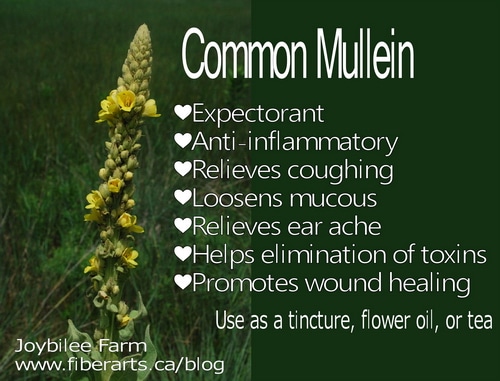
Mullein (Verbascum thapsus) stands out, especially every other year when this biennial’s tall, slender flower stalk is topped by a scattering of yellow blooms like the one I stopped to admire.


I first became aware of this widespread wildflower — some may say, weed — when I lived on Cape Cod in the 1970s. Back then, I’d find mullein growing on the edge of the bike trail, along quiet roads or in disturbed soil. Despite how much Cape Cod has developed since then, I imagine mullein still thrives in some of those same well-drained, sunny spots.

Mullein, which is native to Eurasia and North Africa, has a long history as a multi-purpose plant. Although its seeds are poisonous to people, in the 4th century BC yellow mullein flowers were used to dye hair while early Romans made torches out of the plant’s long stalks after dipping them in tallow. Colonists, who introduced mullein to the New World in the 1700s, used mullein seeds as bait to stun fish. More recently, an extract made from mullein leaves is used to control mosquito larvae.


With such a long flower stalk, it's no surprise early Romans thought used mullein as torches


Mullein is also one of the oldest known medicinal plants. For centuries, people around the world have used its leaves to ease respiratory and skin problems. Ancient Greeks sought relief by making a tea from the leaves while Native Americans dried leaves and smoked them.


Following a long tradition, Mullein Leaf Tea Bags and Mullein Oil are still used today for medicinal purposes


The plant’s anti-inflammatory properties also make the leaves useful as a poultice to soothe skin irritations. Oil made from the plant’s flowers is traditionally used to treat earaches and swollen glands.


Although I find its history fascinating, my own interest in mullein is more mundane. I simply like the way it looks. I like its tall stature and bright flowers. I especially like the plant’s soft leaves — the softest leaves of any plant I’ve ever felt! I also like that mullein attracts a wide range of wildlife. Goldfinch and indigo buntings eat mullein seeds while tiny hummingbirds like to line their nests with the plant’s soft leaves. Many bees and flying insects pollinate mullein and drink its nectar.

While mullein is not native to Florida, it has been part of the landscape for centuries. Like most wildflowers, it has a tendency to spread on its own but that doesn’t make it invasive. Mullein is not included on either of the two Florida Exotic Pest Plant Council lists of invasive exotic plants.

When I drove down Villa City Road and saw mullein growing by the roadside, I was pleasantly surprised. Seeing a plant I remembered from my earlier days brought back happy memories.  Mullein is a humble plant that commands attention without demanding care. Whether considered wildflower or weed, mullein is a plant with much to offer.


Monday, March 3, 2014

Riding through time...

Old County Road 50 in Clermont between North Hancock Road to the west and CR 455 to the east is a winding, two-lane road that runs more-or-less parallel to the newer State Road 50.

At one time, Old C.R. 50 was the main route between Clermont and Winter Garden. In those days, black Model Ts must have chugged along the curvy path following a route sketched out not too long before by horses and wagons.


An old car on a new road


Passengers would have passed by a scattering of wooden, two-story homesteads owned by families tending small herds of cattle and groves of citrus trees. A driver might have waved a friendly hello as he passed by a homemaker picking vegetables from the kitchen garden.


Cattle enjoying a surplus citrus snack


But those times are long gone. These days, slick sedans and extended cab pickup trucks make fast work of the curves and hills on Old C.R. 50 as they zoom by one planned residential community after another. There’s nobody around to wave hello to, even if one was willing to turn off a car’s thermostatically controlled air conditioning system and roll down the window, because tall privacy fences or a development’s perimeter walls shield most homes from prying eyes.

That’s what happens to open land. Time goes by and property that once nurtured a family’s hopes and dreams gives way to progress and the reality of living a long life. Homesteaders get older and can no longer take care of the animals and crops as they could when they were young. Children grow up and move away to pursue their own dreams.


Over time, open land often gives way to development


Without anyone left to tend the fields or maintain groves, land is sold off to developers who divide it into minuscule lots. They install “improvements” and “amendments.” Well-lit paved roads appear where cattle once grazed. Lavish clubhouses, golf courses and playgrounds replace fruit trees, vegetable gardens and rope swings.

Although I understand and accept the inevitability of transition, that doesn’t mean I have to like it.

Whenever I drive along Old C.R. 50 between Clermont and Winter Garden, I take it slow. This is my time to imagine what life was like in the past and to savor the few spots along the road that remain undeveloped.

As I turn off North Hancock Road onto Old C.R. 50, I absorb the view of the beautiful hillside to the north. Cattle still graze on that lovely acreage dotted by small ponds and picturesque sheds. Less than a mile to the east is a homestead on the south side of the road that still operates as a working grove and cattle ranch. I’m sure the house and barn have seen better days, but the buildings still manage to put their wooden arms around a family and embrace their dreams.


Old homestead in forefront.  New housing development in the distance 


I’ve noticed only one other property on the road that operates as an agricultural-based homestead, and recently I saw a “For Sale” sign posted there. I can’t fault the people for selling. I know all too well how much work it takes to maintain large parcels of agricultural land. No matter what crop you’re raising, farming is a tenuous business. I also understand the pressure of rising land values pitted against an increased tax burden and a diminishing desire to work as hard as one could when age was not part of the equation.

Clermont is not unique. Every town has its own form of Old C.R. 50. Remnants of lives once lived differently than they are today are scattered along many town roads throughout the county, across the country.

For me — a driver passing slowly down a pretty road — all I can do is appreciate what remains of a scenic route. It’s not about whether one type of lifestyle is better than another or questioning whether developing farmland is good or bad. The object for me is simply to be aware — to breathe in the beauty of the past while it’s still here to appreciate.

I like to compare my trips down Old C.R. 50 to inhaling the fragrant scent of orange blossoms. Both provide a stimulating hint of times gone by. Both are too sweet to ignore.


The sweet smell of orange blossoms fades as time transforms more and more groves into residential or commercial develepments


Monday, February 24, 2014

The orange blooms of flame vine light up the landscape

If you like bold colors, you’ll probably love the cascading blooms of Pyrostegia venusta, commonly known as flame vine or flaming trumpet.


Pyrostegia venusta is one of those you-can’t-help-but-notice-me vines. The bright orange tubular blooms of this vigorous climber jump out of the landscape like a flash fire, blazing a colorful streak across the dull winter landscape.

Many flame vines have been catching my eyes over the past few months while driving around Central Florida. Occasionally I’ve passed “well behaved” vines that cover a fence or tumble over a trellis in an attractive, neat fashion. More often than not, however, the vine’s height-hungry tendrils have reached up and out of control.


Native to southern Brazil, northern Argentina and Paraguay, flame vine was first spotted in North America in the mid-1800s and quickly made its way across the southern, warm-weather states. Other vines may be satisfied with creeping along the ground, but not this one. It insists upon upward mobility. Once established, a single vine can grow to be 80-feet-tall and can cover entire tree canopies, smothering the trees that lend it support.

Although not listed as an invasive plant species by the Florida Exotic Pest Plant Council, the rampant growth pattern of this vine makes it unsuitable for many landscapes, including mine. As much as I admire its beauty, I’ve also noted its aggressive behavior. I don’t want to add yet another difficult-to-control plant to my own landscape. However, that doesn’t keep me from appreciating it elsewhere.

I still remember the first time I noticed this flower. It was many years ago when I was new to the area and exploring some of the older downtowns. I was driving along Main Avenue in Minneola en route to downtown Clermont when, on my left, I passed by an older two-story wooden building housing the Just My Style Hair Salon & Spa. In front of the structure was a white arbor and low fence completely engulfed by what I later learned was flame vine. What a sight! The plant’s orange blooms were — and continue to this day to be — absolutely stunning.


While people like me admire these climbing beauties from afar, hummingbirds take a more hands-on — perhaps I should say, “heads-on” — approach. The nectar-producing flame vine flowers, which also attract bees, are just the right shape to accommodate a hummingbird’s long bill. The vine also draws songbirds but for a different reason. The dense, tightly woven vines provide well-hidden places to build nests and raise young.


Flame vines have not finished blooming. They should continue producing prolific amounts of tangerine-colored flowers throughout March and early April. So the next time you’re driving down the road and pass a flash of color spread across the treetops or notice a fence line covered in a flush of radiant blossoms, you’ll know you are passing one of nature’s boldest bloomers. Flame vine may not burn like a fire but its beauty will be emblazed on your memory for years to come.

Monday, February 17, 2014

Pretty plant is pretty bad for environment

It’s interesting how a pretty plant can lose its attractiveness once its true nature is revealed.   That’s what happened with me and cogon grass.


I now realize a tall grass I once considered pretty is actually pretty awful

Cogon grass (Imperata cylindrical) is a non-native perennial listed as one of the Top Ten Worst Weeds in the World in the Global Invasive Species database.

Plants on the Ten Worst Weeds list don’t come by that dubious honor without reason. To do so, they must prove to be incredibly invasive, able to survive in a variety of habitats under a wide range of conditions, be difficult to eradicate and be harmful to native plant and animal communities.

Unfortunately, cogon grass fits the bill.

Native to southeastern Asia, cogon grass now covers approximately 500 million acres in 73 countries. It entered the United States in the early 1900s and quickly spread across several southern states. In Florida, where it covers about 700,000 acres, it is listed as a Category 1 invasive — the worst kind — by the Florida Exotic Pest Plant Council.

I didn’t pay much attention to cogon grass until 2013 when I noticed a few patches growing on our property. Before then, I used to drive by fields of white seedheads blowing in the wind and, while I wasn’t sure what kind of grass I was looking at, I admired its beauty. There were times when I even added a few of the fluffy white tops to dried flower bouquets because I thought the feathery white seedheads were so pretty.


Each seedhead produces abundant seeds to float off in the wind spreading the invasive grass far and wide 


Bad Sherry! Had I realized my innocent bouquet gathering contributed to the rampant dispersal of this nasty perennial, I would never have done it.

Wind currents can carry the white feathery seeds — about 3,000 seeds per plant — several miles, but the main way cogon grass spreads is through a network of underground stems called rhizomes. Although the grass can grow up to five feet tall, more than 60 percent of its growth is below the surface in a dense web of sprawling, dirt-hugging roots. Most rhizomes are within six inches of the surface, but some reach four-feet deep into soils ranging from sand to clay to loam and peat.

Like most invasive plants, cogon grass isn’t fussy about where it grows. While it prefers full sun, it can also take root in shady locations. In Florida, cogon grass poses a threat to the health of many pine forests by reducing tree survival and growth. It razor-sharp blades can cut wildlife when they try to navigate through the dense foliage, and its high content of the element silica makes it an unpalatable food source.


The sharp cogon grass blades can be identified by its off-center mid-line vein


Once you become aware of its appearance, you’ll notice cogon grass in a variety of places. I see it along the Florida Turnpike and in fields bordering quiet country roads as well as along busy thoroughfares.


Large fields of cogon grass can be found along highways, country roads and throughout fields


When I realized cogon grass had invaded our property, I figured we could get rid of it by mowing it down. Unfortunately, it’s not that easy. Rather than ceasing its spread, mowing increases it by spreading seeds and rhizome fragments from one place to another.


To think I used to collect the fluffy white seedheads to add to dried flower bouquets...


Because of its intense rhizome system, pulling out clumps doesn’t work either. It isn’t even possible to eradicate cogon grass by burning because it thrives when other species succumb to the heat and flames. The only effective control seems to be repeated applications of herbicides such as Roundup. Even then, complete eradication might take years and during that time who knows how many new cogon grass colonies the wind will carry onto the land.

The more I learn about cogon grass, the less I like it. I’m not sure what we’re going to do to about the infestation on our property but I do know it has changed my outlook. What I used to think of as ‘pretty,’ I now consider ‘pretty awful.’ Instead of seeing swaths of feathery seedheads as spectacles of beauty, I see the menace they present to the balance of nature. Words alone can’t prevent the spread of this aggressive invasive, but they can’t hurt either. Instead of spreading seeds, help me spread the word.

Monday, February 10, 2014

Remembering old friends

When I think of Valentine’s Day — reminder: it’s this Friday — I always find myself reflecting back to the days when Sheldon and Bernice Waterman lived across the street from our family in Kissimmee.

Shelly and Bernie’s wedding anniversary was Feb. 14. It was a second marriage for Shelly, the first for Bernie, and although they had no children together, the couple, older than Ralph and me, easily slipped into the role of friends to us and surrogate grandparents to our kids. At the time, we had three children. Our youngest son had not yet been born.


Bernie and Shelly Waterman, circa 1980s


Shelly, a tall slender man with slightly stooped shoulders, was the kind of fellow always ready with a joke to share. As a stripper on a printing press — a job title that lent itself to no shortage of witty remarks — his stories never failed to amuse and were told in a sweet-spirited manner that mirrored his gentle nature.

His counterpart, Bernie, was a short-haired, middle-aged woman who, despite a slightly acerbic disposition, loved our children unconditionally. She was especially fond of my oldest son, Timothy, who shared her birthday. She and my then-five-year-old son could sit for hours playing the card game Concentration (Timmy was a whiz at that game) and still be up for another round the next day.


Our daughters, Amber and Jenny, fishing at Fort DeSoto with friend and former neighbor, Shelly Waterman (photograph courtesy of Shelly Waterman, circa 1980s)


As a young wife, I often watched my older neighbors with an eye toward gleaning as much knowledge as I could from their relationship. I noticed how much Shelly and Bernie seemed to enjoy each other’s company, how often they smiled at one another and shared private jokes. Although most couples seemed to grow apart as the years went by, Shelly and Bernie grew closer. Whenever Shelly wasn’t at work, he and Bernie were together. Whether it was taking a trip in one of the many RVs Shelly remodeled in the driveway, volunteering at Give Kids The World, going for a bike ride around the community or simply driving into town for groceries, they were two people who acted as one.

We lived across the street from the Watermans for five years before relocating to Lake County. For several years after we moved, we stayed in touch, even visiting each other occasionally. Eventually, however, distance combined with the busyness of raising a young family got in the way. We drifted apart.

Then one day, out of the blue. Shelly called to say Bernie had passed away.

In our culture, we commonly define Valentine’s Day as a day to remember loved ones. Usually that means paying tribute to a family member like a husband or wife. For me, however, an important part of every Valentine’s Day is time spent reflecting upon a couple whose Feb. 14 anniversary epitomized romance, love and togetherness.

I’m sad I lost touch with Shelly and Bernie.  I’m even sadder that Bernie is no longer with us.  But I’m glad this gentle, loving couple was once a part of my life.  Without any deliberate teaching on their part, my neighbors taught me well.  Sometimes Valentine’s Day isn’t just about celebrating those nearest and dearest to us.  It’s also about remembering the unintentional gifts of others.