Monday, March 25, 2013

Unhatched hopes...

The sandhill cranes couldn’t have chosen a tinier island upon which to build their nest, which now contains two eggs.


SIMPLY LIVING
March 25, 2013

I’ve circled April 9th on my calendar.  That’s the day – or at least the earliest possible day – when the sandhill crane eggs will hatch.

Last week’s column documented the cranes’ discovery of a feeder made out of a recycled fire pit recently added to our yard.  Although a pair of the beautiful long-legged birds has wandered through our property for years, their brief ventures across our weedy lawn have always been to seek out underground insects and grubs.  Until their discovery of the new feeder, the cranes demonstrated no interest in any of the bird feeders hanging from tree limbs or attached to posts.

I suppose they’ve ignored the other feeders because they hang too high above their heads, whereas the fire pit feeder was in easy reach just above ground level.  The cranes’ attraction to the low-lying bowl filled with a mixture of seeds and corn kernels was intense and immediate.

One of several hanging feeders suspended too high to attract interest from foraging cranes

Located just above ground level, the seed-stocked fire pit feeder attracted the sandhill crane pair
  

For the two days during which the feeder stood in the yard (I eventually took it away because Florida law prohibits the intentional feeding of sandhill cranes), the birds pecked voraciously at the unexpected backyard banquet. 

Actually, only one of the two birds took advantage of the feast while its partner stood patiently by. 

Male and female sandhill cranes look so much alike, I was never sure which gender was eating so selfishly and with such an insatiable hunger.  However, considering the focus, force and concentration with which the feasting animal attacked the seeds I had a strong feeling the bird was female.  Not only female, but a female in reproductive mode.  I came to that conclusion after reflecting upon my own experiences.  I have four children and when I was pregnant, I remember eating with an unleashed appetite not unlike the seed guzzling gusto displayed by the fast-pecking bird. 

I assumed the crane was preparing to lay eggs and raise babies. 

I was right!

A few days after the fire pit feeding frenzy (before the station was removed), I looked out the window to see only one bird in the yard.  

My immediate reaction was concern.

“What happened to the other crane?” I wondered as I ran down the hall to tell Ralph. 

“There’s only one bird in the yard,” I announced fretfully.  “You don’t think the other crane got hit by a car, do you?”

Sandhill cranes mate for life and because of their lifelong commitment to one another, I lapse into worry mode whenever I encounter (which is seldom) a solitary adult bird.

“I’m sure it’s fine,” Ralph responded soothingly. 

After 41 years of marriage, my husband has mastered the art of “tone-ification.”  When faced with my frantic wildlife imagining, he instantly adopts his “everything will be all right” tone.  It usually works.

It certainly worked this time.  Not only was everything fine, it was better than fine! 

The missing crane wasn’t injured or killed in some highway mishap.  It was peacefully sitting on eggs.  Unbeknownst to me, the pair had built a rough bed of sticks and reeds upon a miniscule spit of land in the north end of the lake.  Since cranes share incubating chores, they were taking turns feeding.  While one bird strolled the yard in search of seeds, insect or other edibles, its partner was sitting on the nest.

The cranes' choice of a nesting spot is a spit of land looking more like a tuft of weeds than an actual island  

Female cranes typically lay one or two eggs that hatch in 30 to 32 days.  “Our” cranes’ nest (I have become quite possessive about the health and welfare of “our” birds) contains two eggs but while I’m excited about the possibility of seeing baby cranes again on the property, I’m trying to be guardedly optimistic.  Cranes have nested here before but they haven’t always succeeded in raising hatchlings.  If we get much rain, the flimsy nests, which sit only a few inches above the water, will flood when water levels rise.  Other times predators kill the young despite the male crane’s valiant efforts to guard and protect his family. 

But most of the time, things work out.  The eggs not only hatch, the colts (the name for young cranes) soon start following their parents around the property.  April 9th is only a couple weeks away.  I can’t wait to see what will happen!


Monday, March 18, 2013

Makeshift birdfeeder draws unexpected visitors

A repurposed fire pit filled with a seed mix meant to attract songbirds, inadvertently turned into a sandhill crane feeding station

SIMPLY LIVING
March 18, 2013

It began innocently enough. 

I rescued an abandoned fire pit from the curbside.  It was trash day, someone threw out an inexpensive three-legged metal stand with a solid bowl and mesh cover for containing sparks.  Although I had no need for a fire pit, it seemed senseless to let a perfectly reusable object take up valuable landfill space.  I pulled over and put it in my car.  At the time, I had no particular plan in mind but I knew an idea would come to me eventually. 

It did. 

By removing the solid bowl and using only the mesh top placed upon the tripod base facing upward, the fire put turned into a bird feeder.  Although subject to rain, the screening provided drainage to prevent seeds from getting wet and moldy.  Standing about two feet off the ground, the bowl-shaped screen was broad enough for several birds to feed at once.  I envisioned a flutter of finches, cardinals and doves taking advantage of their new feeding station so I set up the stand and sprinkled a generous helping of wild birdseed mix into the concave holder. 

Within a couple days, a few songbirds stopped by but it mainly attracted squirrels.  The rodents must have been thrilled with such easy access to food.  I had positioned the feeder about 20-feet away from the kitchen window on top of a grassless circle where a camphor tree once stood in the hope scattered seeds would soon sprout, turning the bare ground into a garden of sunflowers, safflowers, millet and corn stalks.

What I didn’t anticipate was a pair of unexpected visitors.

The other day as I was finishing breakfast, two sandhill cranes meandered into the yard.  Although they don’t visit daily, the cranes stroll by often enough to feel like regular members of our wildlife community.  Sandhill cranes mate for life with a lifespan of up to 25 years.  They also tend to return to where they were raised.  During dry seasons, cranes have nested on grassy islands in our lake and ever since, whenever I see them, I wonder if they are the same pair that nested here in the past. 

That’s what I was thinking the other morning as the tall birds strolled into the yard.  I expected them to poke around the ground hunting for bugs as they usually do.  Sandhill cranes eat grubs, worms, mole crickets and other insects as well as seeds, nuts, fruit and berries.  Their long pointy bills are perfect for underground foraging.  I soon found out their beaks are quite adept other things too.

I watched as the duo made a beeline for the birdfeeder. 

To be entirely accurate, although both birds hightailed to the repurposed fire pit, only one of them actually partook of the seed-strewn smorgasbord.  Was it the male, I wondered, or the female?  Since I’m a woman, I assumed the crane manically pecking seeds was the female packing away calories in preparation for egg laying.  Or, less altruistically, she (or he?) could just have been greedy and selfish.  Whichever bird it was, the crane appeared even more thrilled by its discovery of this unexpected banquet than the squirrels had been. 

It was at that point I realized I was committing a crime. 

In Florida, it is against the law to feed bears, alligators, foxes, raccoons, scrubjays and sandhill cranes.  As stated on the state’s “MyFlorida.com” website, “Feeding of listed species is prohibited because it can negatively alter feeding behavior in some species and can cause them to become accustomed to people.”

Even without the website’s warning, I knew it was wrong to set up a self-serve cafeteria for the red-capped birds.  Yet, as I sat in the kitchen watching their antics, my excitement soared.  At one point, the more subservient male (female?) attempted to sample the bounty but that’s as far as he/she got.  As soon as the less aggressive bird bent its long neck down, the more dominant one shoved it aside with a quick sweep of its beak and a fluffing of feathers.  That’s all it took to remind the male (female?) to stay away.  From then on the alpha bird ate (peck after greedy peck) while its partner stood stalwartly by patiently awaiting whatever dregs might remain. 

It only took one day for the sandhill cranes to become birdseed junkies.  Unfortunately, it took the same amount of time for me to become equally addicted to observing their feeding habits.  Fortunately, my own stalwart partner brought me back to my senses. 

“You’ve got to stop feeding them,” Ralph insisted as I peered out the window with camera in hand.  “Pretty soon they’re going to start pecking at the window.  They’ll tear the screen and besides, they probably shouldn’t be eating that much seed.”

I don’t know if he’s right about the seeds but he’s spot on about potential destruction.  Sandhill cranes are bold, not easily intimidated and fast learners.  On Day 2, after eating every seed in the feeder as well as those that had fallen on the ground, the two birds approached the kitchen window with a demanding glare in their eyes.

“Well,” they seemed to say, “Where is it?  We ate what you gave us and WE WANT MORE!”

As much as wanted to give in.  I turned away.  I haven’t taken the feeder away yet.  But I haven’t refilled it either.  

Monday, March 11, 2013

A botanical puzzle...

SIMPLY LIVING
March 3, 2013

Here’s a question for you:  What tasty, nutritious and versatile fruit grows extensively in Central Florida, produces abundant crops without needing pesticides but is not available fresh in any grocery, specialty store or farmer’s market? 

Need a clue?  There’s a good chance you have this fruit growing in your own yard or, at the very least, in your neighborhood.  It can even be found as part of the landscaping surrounding many businesses you frequent. 

If you guessed, loquat, you’re correct!  Loquats are one of the least appreciated yet most widely planted trees in Southern landscapes.

The lovely loquat...although it rhymes with kumquat, loquats and kumquats are completely unrelated plants
 
Botanically named Eriobotrya japonica, the loquat is a member of the Rosacaea family, a broad group of plants that includes apples, raspberries and strawberries among others.  Native to southeastern China, the loquat likes a temperate or semi-tropical climate.  It grows in Asia, Hawaii, the Mid-East and South America as well as here in Florida.  Some of its other common names include Japanese medlar, Japanese plum, Chinese plum or pipa. 

If you have a loquat in your yard, it was probably installed for its ornamental qualities rather than for its ability to provide an early season harvest of fruit. 

The loquat is a medium size evergreen tree with an attractive rounded shade-providing shape.  Its dark green leaves are thick, stiff and glossy.  In winter, when few plants are flowering, its white blossoms produce a subtle sweetness attractive to bees and other pollinators.  In Central Florida from January to March, loquat trees are covered with clusters of small apricot-colored fruit, which provide an attractive contrast to the dark green, glossy leaves.

Bright green leathery leaves and fragrant white flowers add to a loquat's appeal as a landscape plant

There’s no doubt loquats make a striking addition to a yard and their  size (less than 30’ tall) enables them to fit into compact spaces but gosh, if you’re going to have them in your yard, why not nosh on the fruit as well?  I’m amazed by how few people take advantage of this abundant source of free food.

The one-inch-long ovoid fruit consists of an apricot-colored skin with a texture similar to that of a scuppernong or a concord grape.  The skin covers lighter colored flesh that surrounds one or more large, dark-colored seeds.  Because the inedible seeds take up so much space, there’s not much to eat in individual loquats.  But in my mind, that’s no reason to be ignored.  Many other fruit (think: cherries, seeded grapes…) also have multiple seeds or large pits yet we consume enthusiastically.

Inside each loquat is one or more large, brown seed

In most other parts of the world, loquat’s edible qualities earn far more appreciation than they do in the United States.  In Pakistan, the less ripe, sourer fruits are perfect for chutney or sauce, while in Japan, the ripe fruit is often made into jams, jellies or preserved by canning.  Some people turn the versatile loquat into wine while the more dessert-oriented create loquat pies, cakes or muffins.

Loquat wine is popular in many Asian countries

My own culinary propensity is of a ‘pick-n-pop’ nature.  I stand by a tree, pick as many ripe loquats with my right hand as I can fit into my left hand then proceed to pop each individual loquat into my mouth, one after the other, spitting out seeds as I go.  I don’t bother to peel off the skin as my daughter does when she prepares loquats for her kids, nor do I worry about blemishes on the skin like my far more meticulous husband does.  I simply pick-n-pop…savoring the moment. 

For those of you not yet aware, the sweet taste of Central Florida spring is right outside your door.  If you don’t have a loquat tree growing in your own yard, stop by a neighbor’s to ask if you can pick a few fruit off their tree.  Most people will be surprised to discover that the plant they thought of only as a pretty provider of shade is also a source of sweet, tasty and free-for-the-picking fruit.


Monday, March 4, 2013

Taking time to reconnect

Staying close by eating out 


SIMPLY LIVING
March 4, 2013

There’s something special about a parent’s one-on-one time with a child.  Conversation takes on a different dimension without other people around to hear.  Now that my kids have grown up – my youngest child recently turned 21 and is about to graduate from UCF - I miss those times and the intimacies they fostered.  Perhaps that’s what prompted me a few days after Toby’s birthday, to call him on the phone. 

“Can you meet me for lunch one day this week,” I asked.  “I was thinking Garden Café, like we used to do.”

“Sure,” he said.  “Is something wrong?” 

“No,” I responded, “it’s nothing like that.  I just wanted to spend time with you again, the two of us for lunch.”

During his preteen and early teenage years, Toby and I used to be regulars at the small vegetarian restaurant on West Colonial Drive.  We’d go there after Saturday morning practice sessions at the Central Florida Chess Club.  Toby was, and still is a chess devotee so I, by default, became a chess mom driving him to and from tournaments, practice sessions and private lessons waiting around while he studied, competed or played games with others. 

For several years, the 35-minute drive from our south Lake home to those CFCC practice sessions in downtown Orlando was part of our routine.  While my burgeoning chess maven immersed himself in strategies and techniques, I sat in the car, savoring a few hours of uninterrupted reading time.  When the sessions were over, he’d pack up his chess bag, I’d lay my book aside and we’d head over to Garden Café for a light lunch before driving home.

By the time I got off the phone with Toby, we had arranged to meet on a day that fit his schedule, which happened to be a Saturday at noon.  He even had a chess tournament to go to afterwards, which seemed serendipitous.  

The closer it got to Saturday, the more eagerly I anticipated our meeting.  Enthusiastic as I was however, a sense of sadness tempered my emotions.  It felt like the moment I was approaching punctuated the end of an era.  Because my youngest child will soon be leaving the state, I knew our chances of one-on-one times together were fleeting at best.

We arrived at the restaurant simultaneously and hugged in the parking lot.  My first impression was that he seemed taller (or was I smaller?) than the last time we saw one another.  After settling into a booth and reviewing the mostly unchanged menu, we placed our orders.  A comfortable zone of catch-up conversation ensued.  I gave Toby a quick overview of what each of his siblings was up to, how his father was doing and what was going on at home.  He in turn filled me in on his plans for next year, how his girlfriend was and a little bit (as much as I could comprehend) about stochastic processes, the field of mathematics that is his current academic focus.

By the time the meal arrived and the jasmine tea had steeped sufficiently to pour, we’d gone well beyond appetizer chatter.  More meaty matters (as much as can be expected at a vegetarian eatery) were being explored.  We touched upon relationships, feelings and the importance of intimacy. 

I can’t say exactly how or when it happened but somewhere along the line, it felt like old times.  Once again, we were two people exploring subjects that normally go unspoken.  We were mother and child, confidants and sounding boards.  I listened to him talk and when appropriate, offered suggestions and advice.  In turn, he made comments, a few criticisms and revelations.  By the time we sipped the last drops of tea from our cups, the plates were cleared and the bill paid. I felt far richer despite having less money in my wallet.

Kids grow up and move away.  It’s normal, healthy and to be expected.  But it’s also normal and healthy to want to maintain an intimate relationship with open discussions about things that matter.  Feelings.  Emotions.  Subjects of the heart. 

As we walked back to our separate cars and hugged goodbye, I willed myself to restrain the teardrops welling in my eyes.  They were tears of sadness for the fleetingness of time and tears of pride for a child who has developed into such an independent, responsible and kind adult.

Toby drove off to his tournament and I got in my car and headed home.  Our destinations were different but our hearts were together.  

Monday, February 25, 2013

Tropical sage...a wise addition to the Southern garden


Tropical sage, a popular Southern plant


SIMPLY LIVING
February 25, 2013

I’m waiting for hummingbirds to discover my tropical sage plants. 

Last fall, my daughter removed a large patch of the pretty, scarlet-colored flowers from one of her garden beds but before tossing the lot into her compost pile, she put a couple aside for me.  I accepted her gift gratefully and placed the small starts in my kitchen garden where I hoped their bright red blooms would attract butterflies, bees and especially hummingbirds.  Since I spend considerable time in the kitchen preparing food and cleaning up afterwards, I like to reward myself with pretty views to gaze out upon from the kitchen window.  

In the months since, the flower stalks have grown tall and the plants have sprawled broadly.  Unlike Amber’s yard where garden space is limited, I have plenty of room for plants to expand – if they’re the right plants.  Rather than installing more exotics that look lovely but turn out to be incredibly hard to control or eradicate, I’m on the lookout for Florida-friendly additions that provide beauty and attract wildlife without the need for much attention.  Tropical sage fits the bill.  I haven’t noticed any hummers yet but I’m sure their arrival is just a matter of time.

Although its botanic name is Salvia coccinea, tropical sage is a popular southern plant with many monikers.  Common names include Texas sage, scarlet sage, blood sage, hummingbird sage and red salvia.  Salvias are the largest genus of the mint family and tropical sage (like all mints) has square stems, aromatic leaves and small flowers displayed in a whorl around upright stems.  The tubular red flowers, which attract so much attention from nectar-seeking wildlife, are about an inch long and perfectly shaped to accommodate a hummingbird’s long, pointy bill.  

I’ve planted my tropical sage in a flowerbed where I’m also growing a purple sage, orange cosmos and a few red, pink and white pentas.  Over time, I’ve enhanced the soil in that garden with compost, peat and lavish amounts of grass clipping mulch.  While tropical sage abides such soil amendments, it can also prosper in less enhanced settings.  As long as it gets a few hours of shade every day, it will grow in dry, sandy spots as well as rich loam. 

The blooms, which continue year round except during freezes, are more profuse if the plants receive at least some irrigation.  However, even when ignored completely, tropical sage will survive.  It just won’t thrive like it will when given a little attention.

From a lazy gardener’s point of view (mine!), one of tropical sage’s many assets is its ability to self-seed.  With her limited garden space, my daughter doesn’t find this characteristic as endearing as I do.  In her yard, salvia coccinea volunteers kept popping up and taking over spots where she would have preferred to grow vegetables and other herbs.  Although Amber appreciated seeing all the fluttering wildlife the plants attracted, the self-seeding Florida wildflowers simply took up too much valuable real estate. 

Unlike Amber, I’m ready for Florida-friendly, wildlife-attracting, low-maintenance plants like tropical sage to overtake garden space.  I wouldn’t mind in the least if the two plants my daughter gave me blazed a scarlet path beyond the garden and into other planting beds.  I wouldn’t even object if they continued spreading their way around the lake.  

One of these days, a hummingbird will discover the tubular red blooms in my kitchen garden.  When it does, the tiny bird will be happy to have found a new source of life-sustaining nectar.  I’ll be happy too because we’ll both be nourished - one by nectar, the other by fluttering moments of beauty.  

Monday, February 18, 2013

Local farmers step up to the plate

An early crop of mulberries

SIMPLY LIVING
February 18, 2013

It looks like it’s going to be an early spring.  Loquats began ripening toward the end of January, a good month ahead of normal and the mulberry trees in our yard are flush with fruit.  Blueberries are also ripening earlier than usual.  While that’s one crop we don’t grow ourselves, we do take advantage of nearby farms that welcome u-pickers.

Loquats are also ripening earlier than usual
 
One of our favorite U-pick operations is Lake CatherineBlueberries in Groveland (5849 Lake Catherine Rd, Groveland; 352-429-8221) run by Dustin and Jamie Lowe.  According to Jamie Lowe, this year commercial picking should be starting in March and they expect to open their U-pick operation in early April.  That’s a couple weeks ahead of last year, but I’m not complaining.  I’ll gladly indulge in an early feast of local produce.

U-pick blueberry season should be beginning in early April

The popularity of locally grown fruits and vegetables seems to be on the rise.  Within a five-mile range of my home, I know of three new “farmettes,” backyard gardens turned into businesses to supplement the fruit and vegetable needs of several families.  Three other specialty farms – farms that focus on specific crops like strawberries, blueberries and blackberries – are also nearby as well as three “egg farms” where small flocks of free-range chickens produce enough eggs to help their owners earn a little extra “scratch.”

No eggs can compare in taste, texture or nutritional value to those produced by backyard flocks of free-range, uncaged chickens

My son’s girlfriend, Malory Foster, is among the new crop of garden enthusiasts eager to share a passion for plants with the public.  Shortly after joining forces, Malory converted a sandy patch of weedy lawn into a verdant oasis of organic vegetables.  One garden led to two, which led to a third as well as the installation of a small greenhouse.

Malory Foster and Tim Boas share a passion for farming and a desire to share their knowledge of organic gardening and healthy living with others

My husband and I have watched with nostalgic pleasure as the energetic couple sought out sources of local horse manure then proceeded to tote loads of the nitrogen-rich fertilizer to their property to mix with woodchips, peat and compost.  Just as we did when we were starting out, Tim and Malory have managed to transform sadly deficient soil into a healthy composite of produce-supporting nutrients.  Malory’s gardens now provide enough surplus vegetables to launch a small CSA (Community Supported Agriculture) in addition to a stand at the Clermont Farmer’s Market on Sundays.

The kitchen garden: arugula, Siberian kale, lettuce, broccoli, bok choy, Swiss chard — at The Food Forest at Beautiful Bamboo Farm.

I find myself encouraged by the surging interest in edible landscapes.  Even in small spaces like patios, balconies and postage-stamp-sized front yards, people have begun to realize how much sense it makes to grow a few vegetable, herb or fruiting plants. 

Perhaps the abundance of online information has helped. 

Anyone who wants to learn how to grow a particular plant need only do an Internet search for how-to videos.  Consider tomatoes.  A Google search on “how to grow tomatoes” yields 1.2 million posts by people eager to teach others how to do everything from plant tomato seeds to trellis growing plants, to preserving their harvest. 

And then there’s Facebook. 

In addition to reconnecting with high school classmates, Facebook is a great place to find others who share common interests.  Both experienced and would-be gardeners can join any of Facebook’s many specialty groups set up by individuals with passion for particular aspects of homegrown goodness.  One of the Facebook groups I find particularly inspiring is called Grow Food Not Lawns (website: www.growtest.org), which strives to spread the word about sustainability, permaculture and edible landscaping.

Fortunately for those who either don’t have the opportunity or interest in growing their own food, people like Malory Foster, Dustin and Jamie Lowe and numerous other small-scale, local farmers have stepped up to the plate.  Their willingness to dedicate the time, labor and resources needed to provide the public with fresh grown, local foods is a welcome addition to the community. 

No matter whether the growing season is running early like it is this year, late or along normal lines, it’s good to know resources are available to make locally grown foods more accessible to anyone with the desire to seek out a more nutritious (and delicious!) way of eating.     

Online sources for local farms:

Monday, February 11, 2013

Forget cut roses — give valentine a rosebush

Red roses are a traditional Valentine's Day gift


SIMPLY LIVING
February 11, 2013

What gift is more traditional on Valentine’s Day than a bouquet of red roses?  Red roses represent respect and a creative spirit.  They symbolize romantic love and enduring passion.  However, as beautiful as they are, cut flowers have a short life.  Within days, they begin to fade until the blooms eventually wilt on the stem and are tossed away.

If only there was a way to make the gift of red roses last forever…

There is.  Plant a rose bush! 

Of the many roses to choose from, one stands out.  Rosa “Louis Philippe” has just about everything one would want in a rose.  It is a prolific bearer of medium-size, deep red blooms that have a wonderful fragrance.  It naturally resists diseases and pest problems that bother many other more delicate cultivars, requires minimal care, no pesticides and is a hardy specimen that been around for a long time. 

In Florida, where it has adorned landscapes since the late 1800s, Rosa “Louis Philippe” has many names.  It is known as ‘Florida rose’, ‘antique china rose’, ‘Florida cracker rose’ or simply ‘cracker rose.’  
But no matter what name it goes by, this aromatic beauty is sure to supply an abundance of deep red blooms throughout most of the year.

On our property, we have several Louis Philippe plants and each one boasts a multitude of blooms.  We have Louis Philippe roses abutting our parking area, near the entry and surrounding our compost pile where the sweet scent of roses helps displace the less pleasant odor of decomposing food matter.  All of our plants came from cuttings of the original rose purchased more than 20 years ago.  Louis Philippe is easy to propagate by cuttings. 

Although we established most of our young plants in areas that receive irrigation and soil enhancements, we have one plant that receives no such attention.  When my son Tim stuck a rooted cutting across the lake under a pine tree, I was dubious.  The only water that location receives comes from rainfall, the spot gets little sun due to the pine canopy and receives no attention from us since it is so far from our house.

Despite receiving no irrigation except rainfall and being planted in pine forest, our Louis Philippe rose is flourishing
 
However, not only did the young rose survive.  It thrived!  The plant is spectacular.  Lush with foliage and flush with blooms, I can honestly say it is doing better there with less attention than the more carefully planted and irrigated specimens closer to our home.  Across the lake where it is left alone, the rose can do what it does best – grow dozens of ruby-red, beautiful, fragrant roses.

Louis Philippe is a bush rose that likes to spread out and sprawl but it can also be pruned or shaped to fit a snug spot.  No matter where it is planted or what form it ultimately takes, Louis Philippe will produce a year-round supply of lovely flowers. 

If you’re searching for a Valentine’s Day gift that speaks volumes, consider adding a Rosa “Louis Philippe” to your landscape.  If a single red rose says, “I love you” and a bouquet of blooms mean, “enduring passion,” what message could an entire bush filled with red flowering fragrance possibly say?  

To me, it says you care enough to grow together.  It symbolizes the desire to create beauty out of briars and to thrive even when times are tough.  It’s a message of commitment and long-lasting love. 

Can one plant really do that much?  Try it and see.

LOCAL SOURCES FOR LOUIS PHILIPPE ROSES


Monday, February 4, 2013

No guilt: Enjoy chocolate without fat or sugar

Chocolate covered strawberries is just one way to enjoy homemade cacao powder concoctions.

Simply Living
February 4, 2013

I’m not a big fan of chocolate but my husband is.  However, until recently, Ralph has been careful not to overindulge.  For health reasons, he didn’t want to consume too much saturated fat or sugar, ingredients found in most manufactured chocolate products.  His self-imposed limit was one small piece of dark chocolate a day and he rarely cheated. 

He doesn’t restrain himself anymore. 

Ever since we discovered how easy it is to make fat-free, sugarless, no-cooking-involved confections at home out of raw cacao powder, Ralph eats as much chocolate as he wants without guilt or health worries.  In fact, the way he now consumes chocolate might even be beneficial to his health.

Raw cacao beans are high in essential minerals like iron, magnesium, calcium, zinc, potassium and copper.  Research suggests that the antioxidants found in raw cacao beans aid cardiovascular health by improving circulation and lowering blood pressure. 

As if that weren’t enough, when you eat a confection made out of raw cacao powder, feel-good signals flood your body.  Neurotransmitters like serotonin and endorphins send out messages of calmness and wellbeing that improve moods and act as anti-depressants.

Sound good?  Tastes better!   

It only takes three basic ingredients - raw cacao powder, liquid and stevia – to make fat-free, low-calorie, no-cook chocolate confections at home.  However, how much of each ingredient to use depends on what you want to make.  I like to start each day with a hot chocolate drink made with more liquid than the gooey mixtures Ralph prefers.  Adding extra liquid to the powdered cacao creates a thinner, syrupy concoction while adding less yields a more fudge-like texture.  Similarly, the amount of stevia (we use both a powdered form and a liquid form of stevia) will determine how sweet the chocolate becomes. 

The two brands of cacao powder we use – Raw Cacao Powder by NavitasNaturals and Madre Labs’s CocoCeps – are both excellent.  For stevia, I’m partial to the brand NuNaturals, which makes both a Pure Liquid Clear Stevia as well as NuNaturals' NuStevia White Stevia Powder.  For a liquid, we have tried water, tea, juice and unsweetened soymilk but any liquid will do. 

Making no-cook, chocolate at home is all about experimentation.  It’s important to begin with just a little, perhaps a couple tablespoons of powder mixed with a teaspoon of powdered stevia or about 10 drops of liquid stevia.  Add to that a few drops of liquid, stirring until it is no longer lumpy then increase the liquid a little at a time until the desired consistency is achieved.  To determine if the chocolate’s texture is what you want or if it is sweet enough, take frequent tastes.  Remember, eating chocolate made without the fat or sugar is good for you! 

Once you’ve arrived at a desired consistency and flavor, try dipping various fruits and nuts into the chocolate.  Strawberries, which are just coming into season in Florida, are yummy when dipped in stevia-sweetened cacao syrup.  After enjoying them fresh, try placing a few chocolate-dipped fruit on a platter to place in the freezer for a few hours where the cold air will cause the chocolate to harden. 

End result:  A satisfying dessert that’s low in calories and fat, tastes delicious and - most important – will make you feel good while improving your health.

(Helpful Hint) - You can save money and shopping time by ordering all the products mentioned above from www.iherb.com where you'll automatically receive $10 off your first purchase if you use the code LEJ891 at checkout.

Monday, January 28, 2013

A Holding Pattern...

Unripe fruit – neither ripening nor rotting – on a papaya tree

Simply Living
January 28, 2013

Even though it’s winter, the papaya tree on the south side of our house still has fruit.  The fruit aren’t ripe nor have they noticeably matured over the last few months.  On the other hand, they haven’t frozen or fallen off.  They haven’t rotted either.  They’re in a holding pattern, a tropical plant trying to exist in a semi-tropical locale.

I can identify with the papaya.  I’m hanging on too, waiting to see what will happen.

We all go through situations with resolutions beyond our control.  We wait.  We wonder.  We anticipate results.  What kind of winds will blow?  Will they be cold and biting or warm with relief?

With plants, the answer is relatively simple and unimportant.  Sure, I want the papaya tree to survive.  I’d love to know it made it through the winter so we can reap our reward and enjoy the sweet fruit.  But if it doesn’t make it – if the fruits fall to the ground and rot - it will be a small disappointment.  

We tried.  We failed.  We’ll try harder next time.

With people, it’s different.  The result is everything, the waiting interminable.  We do our best to improve situations.  We ask questions, do research, discuss and debate.  Ultimately, it’s no different than it is with the papaya.  We hang on and wait to see what will transpire.

To be a successful gardener, you must choose the right plants to put in the proper location at the appropriate time of year.  If you provide adequate water, the right soil mixture and fertilizers and monitor pests, there’s a good chance the plants will thrive. 

But not always. 

Unanticipated variables can arise.  Unexpected weather shifts can wreak havoc on a garden or grove.  So can insect infestations or damage done by animals.  Sometimes plants don’t thrive even when it seems you’ve done everything right.  

That’s how it can be with people too.

You nurture your internal garden.  You plant judiciously, feed and exercise with care.  You provide balance and an ideal locale.  Still unexpected variables emerge, dispelling intentions, redirecting plans. 

Sometimes I wish it were simpler.  I wish for a formula – a prescription of truth.  In my personal sci-fi fantasy, we start each day by stepping into a fail-proof machine to calculate body chemistry.  If the machine finds an excess or lack of a specific nutrient, it spells out in unequivocal detail a remedy for the problem.  No conflicting data.  No Google search needed. 

Although I try not to squander valuable time contemplating imaginary scenarios, lately I can’t help but wish for something better than our current medical system.  When plants are in a holding pattern, we can afford to let them be but people are too precious for a similar passivity.

Unfortunately, conversations about health care reform often fail to answer the most basic of questions.  For instance, why should it be so difficult to find out how much specific medical services cost?  In no other industry are prices so infuriatingly inaccessible.  Treatment options are another subject of inscrutability.  There is no consensus among medical experts.  How is a patient supposed to know what information to believe, what path to follow, what direction to take?  Finally, why do health care professionals continue to rely on outdated modes of communication like faxes and written records when every other industry has switched to online or email transmissions? 

When I look out the window and see the unripe papayas still hanging on the tree, I see a simple plant with an unknown future to be determined by climate, weather and timing.  Like the papaya fruit, I’m in a holding pattern but without answers so simple or clear-cut.  

Hopefully, both there will be a sweet ending, a fruitful conclusion to an uncertain fate.

Monday, January 21, 2013

Learning happens one wobbly step at a time

At the beach, 11-month-old Trillian practices her newly learned walking skills

Simply Living
January 21, 2013


My 11-month old granddaughter recently learned to walk.  Over the past two months, her balance has rapidly improved but she still falls often, landing with a plop on her padded bottom before picking herself up and waddling off again.

During a recent outing to the beach, her mother confided in me with a certain amount of anxiety, “She still falls a lot.”

I watched my granddaughter’s happy face as her stubby legs forged an unsteady course across the sandy shore.  I then turned to my daughter and said, “She does fall often but she gets back up and tries again.  That’s what babies do.”

Although the day continued without further discussion about toddlers learning to walk, my mind kept revisiting the subject.  Little children take falls in stride but somewhere along the line that changes.  Falls feel like failure.  Why does that happen?

My granddaughter Trillian is too little to be aware of the concept of failure.  For her, every plop to the ground is another chance to practice her pick-myself-up skills.  She gets up and we adults applaud her efforts.  We even lavish encouragement.  “Good job!” we say as she waddles over for a congratulatory hug.

What would happen if grownups received similar support? 

I’m currently trying to learn a myriad of financial operations.  My husband is teaching me how to navigate computer bookkeeping and banking programs.  Like my granddaughter, I find myself often failing, making mistakes and having to start over again.  However, unlike Trillian, I don’t do it with a smile on my face nor is my rebound from those errors a rousing gush of encouragement.  I often feel frustrated, slow and dimwitted. 

In reality, failure is the key to success. 

If little kids got frustrated as quickly as grownups do they’d never learn anything.  Every skill we have is accomplished through practice, patience and persistence.  We try then we try again.  Over and over the task is repeated until it’s perfected.  In childhood, that’s a given.  In adulthood, not so much.  For some reason we assume adults should instinctively know how to do things.  Maybe not on the first try but surely by the second. 

News flash: That’s not how it works.

Regardless of age or skill set, learning only happens after repeated failures.  I look at my granddaughter’s attempts to stand upright and navigate on two feet and I see how much she has accomplished in such a short time.  If I gave my own attempts to learn new skills a similar appraisal, I’d feel equally impressed.  I make mistakes but I also make headway.  My knowledge of how to navigate complicated computer programs has increased and my understanding of financial matters has improved.  Like Trillian, I’m still a bit wobbly, but I am making progress.

Abraham Lincoln once said, “Success is going from failure to failure without losing your enthusiasm.”  

Little children know that instinctively but adults need reminding.  Watching Trillian on the beach reminded me that learning happens one-step at a time with many a fall in between.  The important thing is to not give up and maybe even try to move forward with a smile.     

Monday, January 14, 2013

Our January tomatoes

Tomatoes lined up waiting to be eaten


Simply Living
January 14, 2013

We were sitting at the kitchen table eating a lunch that included thick slices of a plump, red tomato freshly picked from one of the plants in the sunroom.

“I think I finally understand why my mother liked tomatoes so much,” Ralph said as he took another bite of the sandwich he made by wrapping tender young broccoli and kale leaves around slices of tomato, avocado and chives.    

A few weeks before, when winter chills seemed imminent, we moved a couple dozen cold-sensitive container plants including several tomatoes vines heavy with unripe, green fruit into the sun-warmed space.  The heat-loving tomatoes wasted no time responding to their new location.  Within days, hints of red appeared on the green orbs and shortly after, they grew flush with color.

Ralph was amazed by their rapid transformation.  “Did you see how many tomatoes are ripening?” he asked.  “They look incredible.”

He’s right.  They did.  At one point, we picked five ripe tomatoes off a single plant. 

This is the first year we’ve tried raising vegetables, herbs and a few flowers inside a solar-heated room attached to our house.  In addition to tomatoes, we are growing (and eating) sweet peppers, basil and Orlando eggplant.  The bush beans are just beginning and tiny young cukes have begun to form on the cucumber vines.

My garden-loving husband is delighted with this newly discovered means of extending the growing season.  He has been pleasantly surprised by how well all the vegetables are doing but nothing has astonished him more than the tomatoes.

Ralph didn’t think he liked tomatoes.  At least that’s what he had come to believe.

Like many deep-rooted convictions, Ralph’s resistance to tomatoes stemmed from his childhood.  His mother, Mary Boas, was an avid gardener who refused to limit her growing season.  She saved and started her own seeds, had prolific indoor displays of forced flower bulbs in winter and tended to extensive outdoor flower and vegetable gardens during the spring, summer and autumn. 

If you asked me what type of flower my mother-in-law liked best, I’d have to say roses even though she was passionate about many different blooms.  As a teen and into his adulthood Ralph helped his mother with garden chores including pruning rosebushes.  All those hours snipping thorny stems must have made an impression because to this day, he does his best to avoid any contact with those prickly beauties. 

Choosing my mother-in-law’s favorite flower is difficult because she liked so many, but there’s no doubt which vegetable she favored.  Tomatoes were her number one, hands-down choice and she grew some beauties.  As a boy and young man, Ralph helped his mother by pruning, supporting and tying tomato vines.  He sprayed the plants for pests, applied fertilizer and, of course, picked the fruit when they ripened.  However, instead of making him love tomatoes, all the work he did pampering his mother’s precious plants had the opposite effect.  Once he grew up and had his own gardens, he didn’t want to grow tomatoes at all.  

Fortunately, that changed this year after we rescued a few scrawny seedlings from a tenant’s abandoned garden.  Ralph repotted the runts and lavished them with attention.  The plants responded by growing fuller and developing fruit.  After we moved them into the sunroom, they really took off.  Before long, he tasted the results of his labor.  

“I guess I never realized how delicious tomatoes can be,” he admitted after taking yet another bite of his creative sandwich.

Understanding doesn’t always come quickly.  But when it does - like a good tomato - it’s meant to be savored. 

Monday, January 7, 2013

A quest for silliness!

Acting silly is too much fun to be only for the young.  

Simply Living
January 7, 2013

I was walking through the parking lot on my way to the grocery store.  A few paces in front of me were a preschool-aged girl accompanied by a woman who might have been her mother.  The woman was doing what we grownups do, walking steadfastly toward the double entry doors with practiced, measured steps.  I imagine that she, like me, had a long list of chores, and the grocery run was just one more stop to check off of an endless to-do list.

The little girl, however, was oblivious to such mundane motives or tasks.  For her, the trip to the store was probably an exciting outing with a person she adored.  Although she stayed close to her adult companion, the ponytailed lass pranced about with unbridled bliss.  It looked more as if she was crossing a dance floor than a sidewalk.  Her small body was a wiggly swirl of motion as she skipped, twirled and hopped her way into the store.

I followed behind, transfixed by the sight of such unleashed ebullience.
Little kids play.  That’s what they do.  Instead of moving in a straight line, they twist, whirl and weave their way through life.  It’s what we expect of them and it’s good.  But somewhere along the way, usually around the age of six or seven, children learn to behave.  Social awareness kicks in and spontaneous expressions of unsuppressed joy diminish, if not entirely disappear.  A proper sense of decorum seeps into their unconscious until they are consciously aware of what other people think.

The little girl I watched had not yet learned to restrict her motions.  She was unaware of other people’s opinions.  Her body retained the uncivilized exuberance of youth, free from commands to ‘stand up straight,’ ‘keep in line’ and ‘be quiet.’ 

I watched her and thought, “Why does it have to end?  Why must we grow up to muffle our emotions and become so stiffly civilized?” 

It’s an odd juxtaposition.  Adults find kids at play adorable but consider such playfulness in adult behavior inappropriate.  We watch children’s antics with nostalgic bemusement, wistfully recalling how we used to do that sort of thing when we were young but don’t do so anymore because now we’re grown up.  Time has passed.  We know better. 

I wonder if we do.

When I encounter a child like the happy little girl enjoying her grocery store outing, I see what I’ve lost and realize it’s much more than youth.  It’s the ability to be in the moment, to appreciate where I am and what I am doing.  I’ve lost my joie de vivre, my playful enthusiasm. 

That doesn’t mean I can’t find it again.  I often do.

Observing children reminds me to be playful myself.  I may not follow the little girl’s example and skip into the store, but when I’m leaving the market, I like to hop onto the shopping cart and ride my way back to the car.  Sometimes I access my inner silly by stopping to pick up pennies (yes, I actually bend down when I see one and pick it up) or by pretending a curb is a balance beam and trying to walk its length without falling off (not as easy as you’d think).  And if it’s raining when I come out of a store, I often slip off my shoes and splash in some puddles as I run back to my car. 

These are just a few small ways I’ve found to reclaim the bliss of youth, to revisit the little girl inside me, my once playful self.  As this New Year begins, instead of looking ahead, I’m going to look back.  I’m going to continue trying to be a kid again if only for a few minutes at a time.  In 2012, I hereby resolve to act silly.  I resolve to have fun!

Monday, December 31, 2012

Books that bridge the miles

Tim Boas crossing a bridge during his solo hike on the Pacific Crest Trail  in 2003


In last week's column, I shared four books that took me on virtual trips across the ocean. Today's column explores four domestic locales, places I visited in 2012 courtesy of the printed word.


When she was 22, former waitress and novice backpacker Cheryl Strayed (an invented surname chosen because it epitomized her disconnected life) began a solo trek along the rugged Pacific Crest Trail. Distraught by the recent death of her mother, racked by failed relationships and poor personal choices, Strayed hoped the 1,100-mile journey would help her regain perspective, purpose and a new direction in life.
To say she accomplished those goals is an understatement.
Partly adventure story, partly memoir, Strayed's riveting tale, "Wild," takes the reader up and down snowy mountains, across arid deserts and through remote countryside where few people live and fewer venture.

I felt a special connection to this story because my own son took a similar trip 10 years ago. When he was 18, Tim hiked the Appalachian Trail from Georgia to Maine. The following year he headed west to tackle the Pacific Crest Trail, choosing a route nearly identical to the one Strayed describes in her book. Like the author, Tim also chose to go alone.

A signpost in one of the many desolate sections of the PCT photographed by Tim in 2003


I found Strayed's story to be both enlightening and frightening. I knew few details about my son's trips when he was hiking, and after reading her story I have to admit I'm glad I was so poorly informed. Some things are best learned after the fact, including some of the crazy and (from a mother's perspective) scary solo experiences such as those described in the book. Wild indeed. Check it out at cherylstrayed.com.

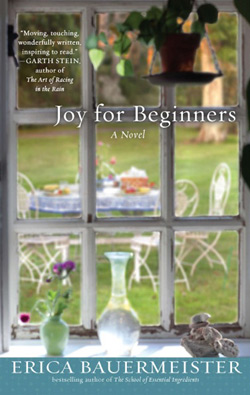
While her mother's death from cancer inspired Strayed's journey of discovery, surviving a life-threatening illness motivated Kate, the main character in Erica Bauermeister's 2012 novel "Joy for Beginners," to take on a life-altering adventure of her own.

Thus begin multiple voyages of personal transformations. As a reader, I traveled along with the seven main characters, with special attention focused on Kate's riveting ride down the river. Like Kate, I too have always found such an adventure intriguing yet peppered by a generous helping of fear. As I watched this fictional character overcome both mental and physical obstacles, I felt my own objections loosen. My strengths and joy expanded. Maybe someday I'll have the courage to take a similar trip in real time instead of vicariously experiencing it through the pages of a book. For more, go to ericabauermeister.com.


A vicarious experience was the only option in Jean Kwok's 2010 novel "Girl in Translation." I loved this book because it offered insight into a world I would otherwise have known nothing about — that of Chinese emigrants to Brooklyn in the mid-20th century, when working in sweatshops was commonplace and acclimating to a new culture was fraught with obstacles.
As a person who enjoys historical fiction, I found Kwok's artfully drawn characters and situations offered lessons in both cultural nuances and historical facts. I was drawn into the characters' personal struggles and aspirations. As with all good reads, I couldn't wait to find out what happens next while simultaneously not wanting the book's ending to come. When it finally did, I was satisfied with the result. I like novels that don't disappoint, that serve up a hearty helping of edification along with entertainment wrapped up neatly with a positive conclusion. Interested? Go to jeankwok.com.


In the search for contemporary novels of a light, upbeat nature, author Claire Cooke never disappoints. I discovered Cooke in May and proceeded to devour five of her 10 books. My favorite so far, and the one that took me on my most memorable travel adventure, was "The Wildwater Walking Club," which combined several of my interests — gardening, walking, travel and friendship.
The story, which takes place in 32 days, follows the lives of three women living in the same Massachusetts seaside neighborhood. Through their daily walks together, Tess, Noreen and Rosie rack up much more than miles. As their pedometers click off more and more steps, their friendships grow. Deeper understandings of individual problems develop, solutions to problems are found, and new directions chosen.
For me, one of the story's highlights was the trip the women took to the West Coast to attend a lavender festival. At that point, my virtual involvement with the story became so intense that I had no choice but to go out and buy a lavender plant to add to my garden. Look into it at clairecook.com.


I can't think of any book I've read cover to cover that hasn't taken me on some sort of journey. Although I may not physically traverse narrow mountain paths, navigate raging rapids, experience the stifling environment of a sweatshop or inhale the fragrant air at a lavender festival, I can always depend on books to take me on memorable adventures. Books are my ticket to different times and places. They introduce me to unfamiliar cultures and perspectives and make me aware of myriad new ideas.
Travel is indeed grand.

Monday, December 24, 2012

Travel the world by reading books

Books have taken me on many a journey...

Simply Living
December 24, 2012

I didn’t do much traveling in 2012.  Aside from a few trips to Northampton, Mass. to visit Jenny, Brett and our grandchildren, I never left the state, let alone the country.  However, my lack of physical travel doesn’t mean I didn’t take some incredible journeys.

Thanks to the world of literature, books took me across the ocean, throughout the United States and even back in time to bygone eras.  In this week’s column, I’ll share four of my favorite international adventures, exploring books that took me on virtual trips to Afghanistan, Japan, France and Italy.

 
One of my first on-the-page journeys of 2012 was to far away Afghanistan.  While most news stories about war torn countries are unbearably depressing, we occasionally hear about one with a positive theme.  Such is the case in The Dressmaker of Khair Khana by Gayle Tzemach Lemmon.  Lemmon, a former ABC news reporter provides an intimate in-depth study into the world of Kamila Sidiqi, a young woman whose entrepreneurial efforts helped thousands of Afghani woman overcome seemingly insurmountable obstacles.  With little more than a bit of thread and fabric and an abundance of hope and sisterhood support, Sidiqi’s extraordinary efforts changed the lives of her community forever.  The Dressmaker of Khair Khana is a humanitarian story that reads like a novel, uplifting as well as culturally enriching.


While also based in contemporary times, Wendy Nelson Tokunaga’s 2009 novel, Love inTranslation took me to an entirely different country and culture – modern day Japan.  This cross-cultural look at Tokyo society is viewed through the eyes of an aspiring young American singer who ventures overseas in hope of learning the whereabouts of her absent father.  While the story is rich with humor and tenderness, it was the artfully crafted characters and intriguing glimpses into Asian culture that drew me in and kept me turning pages long after I should have shut off the light and pulled up the covers.  When I finally closed the book late one night after a marathon read, I felt like I had returned home from a long and rewarding trip to Toyko, eager for a return visit.


I’ve never been to France but after reading Pamela Druckerman’s 2012 memoir, Bringing UpBébé : One American Mother Discovers the Wisdom of French Parenting I felt like getting on a plane to cross the ocean.  Not that Druckerman’s book is a travel journal.  It isn’t.  It is an exploration of French parenting techniques written by an American journalist living and raising her own young children with her British husband in modern-day Paris.  However, in the process of exploring the ways French parenting differs from American child-rearing, Druckerman takes the reader along on her daily travels in and about that most romantic of cities.  While telling her tale, the author skillfully exposes a multitude of intriguing cultural differences between the two countries. 

Since my own daughters were struggling with similar childrearing issues as the author, I hoped to find a few helpful tips within the pages.  I couldn’t have been more pleased.  Not only was the information helpful, I found the entire book to be a fascinating and insightful read.  

Although categorized as non-fiction, Bringing Up Bébé reads like a novel with a homespun, somewhat self-deprecating and totally entertaining style.  After finishing the book, I passed it on to my husband and then ordered copies for each of my daughters.  It was thoroughly enjoyed by all.


Adriana Trigiani’s 2012 novel, The Shoemaker’s Daughter, is one of those stories that span time as well as continents.  As the story followed the lives of Ciro and Enza through their travels from the Italian Alps to small town Minnesota to bustling Manhattan and back to Italy, I once again found myself caught up in a cultural adventure.  New insights, points of view and perspectives were artful presented in a spellbinding story of love, loss, resilience and hope.  

How fortunate it is to have access to broadening adventures.  Thanks to libraries, bookstores, online resources and word-of-mouth recommendations, a stay-at-home reader like me can travel the world through the magic of words.  

In next week’s column, I’ll share a few of my more domestic adventures; books that have helped me explore the cities, small towns and wilderness areas of our own treasured country. 

Isn’t travel grand!